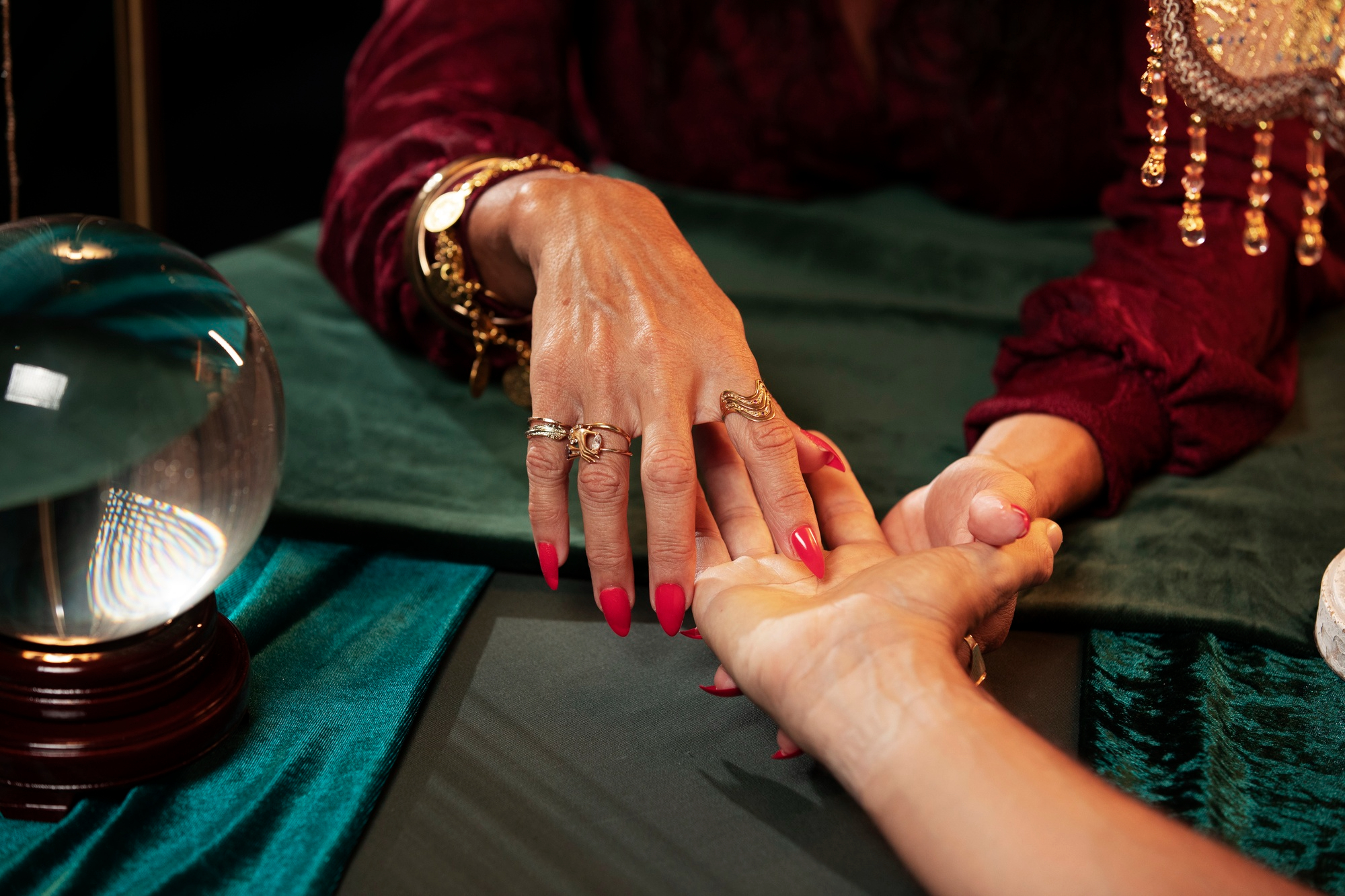
Palmistry
Palmistry, also known as chiromancy, is an ancient art that interprets the lines, shapes, and features of the hand to reveal insights about personality, destiny, and life’s journey. Practiced for thousands of years across cultures from India to China and Greece, palmistry views the hand as a mirror of the soul—each line and curve carrying symbolic meaning about who we are and where we are headed.
The foundation of palmistry lies in the study of the major lines: the Heart Line, which reflects emotions and relationships; the Head Line, which reveals intellect and decision‑making; and the Life Line, which symbolizes vitality and life path. In addition, the Fate Line can indicate career direction and life purpose. Beyond lines, palmistry also considers the mounts (raised areas of the palm) and the shape of fingers and nails, each offering clues about character traits, strengths, and challenges.
Palmistry is not about predicting exact events—it is about understanding tendencies and potentials. For example, a strong, clear Life Line may suggest resilience and energy, while a broken Heart Line could indicate emotional struggles or transformative relationships. By interpreting these signs, palmistry guides self‑awareness, helping individuals embrace their strengths and work through challenges.
In modern times, palmistry is valued as a tool for personal growth, relationship insights, and even career guidance. It encourages people to look within, using the hand as a map to uncover hidden talents and life lessons. Whether you are curious about your destiny or seeking clarity in love, health, or purpose, palmistry offers a fascinating journey into self‑discovery.
Unlock the wisdom written in your hands and let palmistry guide you toward greater awareness and fulfillment.
Awaken Your True Potential with Science & Spiritual Wellness